Work

Incident-grade governance for AI systems in regulated operations

I help CIO/CTO and product-risk teams make AI systems governable at 2am—clear override authority, escalation clocks, and audit trails that hold under pressure.

Start a conversation (get a scoped recommendation)

Share your context and receive a recommended next step within 48 hours.

Featured outcomes

Proof points to start with

Scan the results first, then dig into the artifacts and log entries that back them up.

Decision clarity

Fewer “maybe” decisions, more crisp tradeoffs

Create a decision trail that aligns stakeholders and makes risk explicit before a roadmap locks in.

Jump to proof →

Adoption outcomes

A tighter MVP that users actually adopt

Scope the smallest viable path that proves value in clinical workflows, not just demos.

Jump to proof →

Message clarity

Messaging that lands in 10 seconds

Make buyers understand what you do, for whom, and why now—without a long deck.

Jump to proof →

Discuss a similar engagement

Fit & focus

Fit

Who this is for

Ship products teams can sell and operate with confidence—especially when the cost of a wrong decision is measured in incidents, audits, and patient or customer harm.

Who this is for

  • CIO/CTO, product risk, and responsible AI leaders shipping AI workflows in healthcare, fintech, or enterprise SaaS.
  • Teams that need operational governance capability—not policy theater—to move forward safely.
  • Organizations where compliance, trust, and reliability requirements shape roadmap choices.
  • Leadership teams where buyer trust depends on decision custody, incident response, and auditability.
  • Portfolio or operator groups trying to unstick a company blocked on product-risk decisions.
Regulated system signals
  • Doximity Dialer launch and scale: 100M+ patient–clinician connections with HIPAA-conscious trust design.
  • Director-level care experience leadership across Transcarent and City of Hope clinical workflows.
  • Governance operations design: decision rights, override authority, escalation clocks, and incident learning loops.
  • Venture/operator experience: EIR support, diligence templates, and founder governance rituals for stuck teams.
When this isn’t for you
  • Teams looking for a full-time operator or embedded PM hire.
  • Situations where decisions must stay vague or political.
  • Long retainers without clear decision points.
  • Business models that rely on ambiguous claims or dark patterns.

Practice model

How I partner with teams

A focused model for teams that need growth and governance to move together—so speed does not outrun control.

  • Modalities2-week governance audits, escalation design sprints, and fractional product-risk leadership.
  • MarketsHealthcare, fintech, and enterprise products operating under regulatory pressure.
  • OutcomesFaster detection/intervention loops, clearer ownership, and stronger recovery.

Decision prompts

Operational governance

Build decision and override systems that work during incidents

Define who can intervene, when escalation triggers, and what evidence survives audit and recovery.

  • Decision rights map (ship, override, halt, rollback, audit).
  • Escalation clocks, stop conditions, and operator-safe handoff rituals.

Healthcare + risk translation

Translate clinical, product, and compliance constraints into one operating plan

Connect clinical risk, regulatory controls, and delivery choices so teams can ship with confidence.

  • Failure-mode mapping tied to patient/member harm and controls.
  • Cross-functional operating language for product, risk, legal, and frontline teams.

Product + GTM

Make GTM credibility a consequence of governability

Positioning and scope decisions stay subordinate to controls, ownership, and auditability so commercial claims remain defensible.

  • Buyer/user narrative grounded in accountable product behavior.
  • Roadmap and messaging choices stress-tested against regulatory and incident risk.

See engagement options

Engagements

What you get

Engagement packages

Clear outputs, bounded timelines, and written decision recaps.

We start with the decision you’re stuck on, then scope the smallest engagement that resolves it.

Value framing

Every package pairs product clarity with GTM positioning so teams can move with confidence.

Which engagement fits?

  • Need fast clarity? Start with an advisory call.
  • Need a clear plan? Choose the product/GTM sprint.
  • Need senior judgment over time? Go fractional.

Advisory calls (fast clarity)

Fast decision support when you need clear ownership, risk tradeoffs, and next actions.

Duration: 60–90 minutes Pricing: Hourly.
See details →

Outputs

  • Ideal for: incident escalation questions, control gaps, roadmap-risk conflicts, and leadership alignment.
  • Format: 60–90 minutes, pre-read encouraged.
  • Output: written recap with decisions + recommended next actions.

What success looks like early

  • Before: short context intake and shared documents.
  • During: live decision framing with tradeoffs surfaced.
  • After: recap delivered within 48 hours.

Success (30/60/90)

  • 1 week: a clear decision and next action list.
  • 30 days: reduced churn from unresolved internal debate.
  • 90 days: decision implemented or cleanly parked.

2-week incident governance audit

Focused engagement to map failure modes, decision custody, and escalation behavior before risk compounds.

Duration: 1–3 weeks Pricing: Fixed fee.
See details →

Outputs

  • Decision rights map (ship, override, halt, rollback, audit).
  • Escalation clock specification with owner SLAs.
  • Audit log/override policy template for operators.
  • 2-week action plan with first control changes.

What success looks like early

  • Week 1: incident review, workflow tracing, and operator interviews.
  • Week 2: decision-custody map, escalation clocks, and control spec shipped.
  • Optional Week 3: implementation sequencing with product/risk owners.

Success (30/60/90)

  • 30 days: ownership and escalation behavior instrumented in production paths.
  • 60 days: time-to-detect/time-to-intervene trending down.
  • 90 days: auditability and buyer confidence improve without process drag.

Fractional product-risk leadership

Senior product-risk judgment and operating cadence without a full-time executive hire.

Duration: Monthly Pricing: Monthly retainer.
See details →

Outputs

  • Standing weekly sync + async review.
  • Support on control ownership, roadmap-risk alignment, and cross-functional operating rituals.
  • Executive-level tradeoff decisions and narrative building.

What success looks like early

  • Week 1: onboarding and roadmap audit.
  • Week 2: cadence and documentation rituals established.
  • Week 3+: ongoing decision support and governance alignment.

Success (30/60/90)

  • 30 days: clearer ownership map and risk-prioritized roadmap.
  • 60 days: fewer stalled decisions across teams.
  • 90 days: consistent delivery cadence with executive/risk alignment.

Engagement details

  • Engagement & pricing: Advisory sessions (hourly), fixed-fee sprints, and monthly fractional support.
  • Engagement sizing: If you share context and goals, I recommend the smallest engagement that gets a decision.
  • Availability: Limited openings each quarter to keep the work hands-on.
  • Async rhythm: Async-first documentation with 24–48 hour response windows.
  • Engagement boundaries: Clear decision points, crisp scope, and written recaps after key milestones.
  • Contact: Email: [email protected] · LinkedIn: linkedin.com/in/kanavjain · GitHub: github.com/zz-plant

Start a scoped intake

Case studies

Proof depth

Case study arcs (redacted)

Problem → constraints → intervention → what shipped → measured change. Metrics are rounded and de-identified; range details are shared in intake for qualified teams.

Outcomes in one line

  • Improved telehealth reachability with verified caller ID and trust signals.
  • Reduced avoidable escalations after unifying records and redefining success.
  • Faster high-risk review cycles with clearer ownership and auditability.

How I protect your team: I don’t name sensitive internal politics, and I never publish identifying details without consent. Metrics stay rounded and de-identified, artifacts are redacted, and access is limited to the stakeholders you choose. Quantified deltas are shared in redacted form when available.

Featured case studies at a glance

CaseDomainTimelineImpact signal
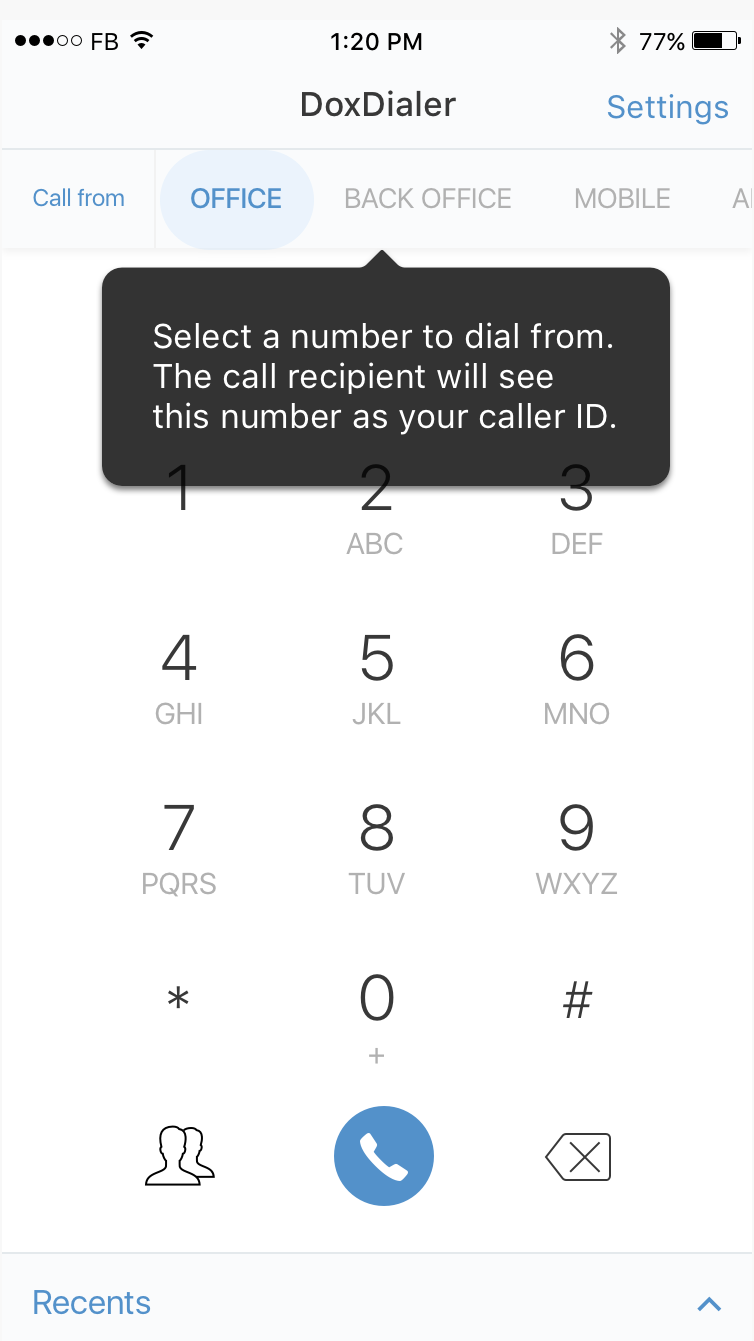
Verified caller ID for HIPAA-conscious telehealth Doximity 2015–2017 Pickup rates improved with verified identity rollouts.
Care navigation that cut avoidable escalations Transcarent 2020–2022 Avoidable escalations dropped after routing and ownership changes.
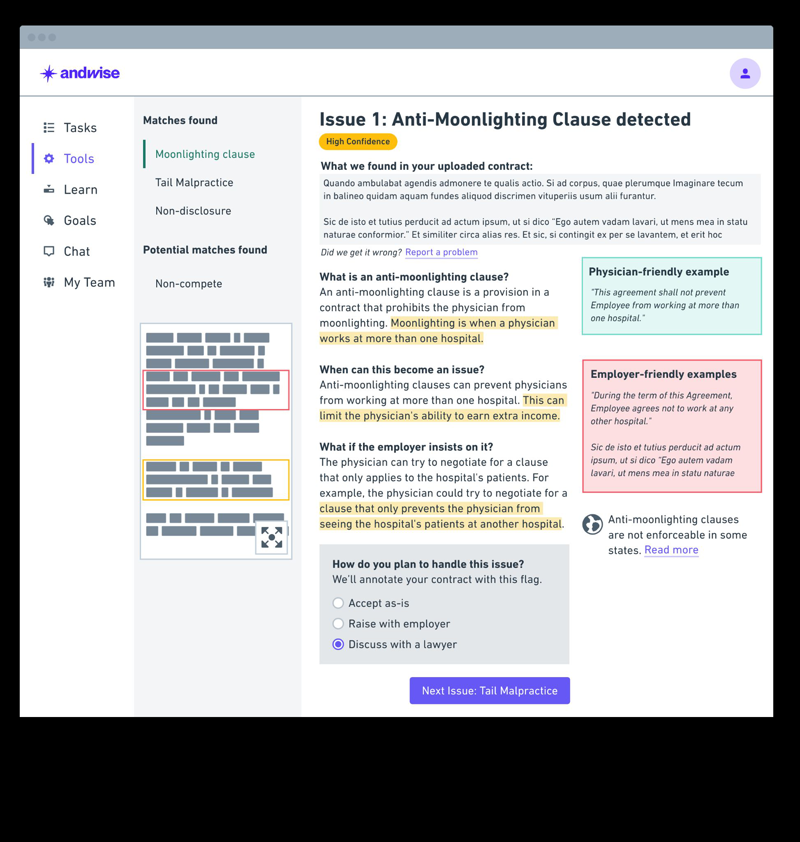
Fiduciary-safe financial planning workflows Andwise 2022–2024 High-risk recommendations reviewed faster.

2015–2017

Doximity

Clinical care illustration showing coordinated patient support.

Verified caller ID for HIPAA-conscious telehealth

Built trusted caller identity and guardrails so clinicians could reach patients without exposing private numbers.

  • Problem: patients ignored unknown numbers, stalling telehealth care.
  • Constraints: HIPAA privacy, carrier spoofing rules, and clinician adoption risk.
  • Intervention: verified caller ID, clear consent copy, and fallback workflows.
  • Shipped: Dialer trust indicators and audit-ready call logs.
  • Measured change: improved reachability and fewer spoofing concerns after launch.
Read case study →

2020–2022

Transcarent

Abstract systems diagram used as a visual anchor for care workflows.

Care navigation that cut avoidable escalations

Reframed success metrics around completed care plans to reduce rework and clinician load.

  • Problem: escalations surged because guidance was fragmented across teams.
  • Constraints: clinical governance, benefit partner rules, and variable patient acuity.
  • Intervention: unified member record and clinician-led routing rules.
  • Shipped: care plan completion dashboards and handoff rituals.
  • Measured change: fewer escalations and stronger completion after unifying records.
Read case study →

2022–2024

Andwise

Diagram comparing friction-heavy and friction-light workflows.

Fiduciary-safe financial planning workflows

Balanced automated guidance with human oversight so recommendations stayed compliant and trusted.

  • Problem: clinicians needed financial guidance without opaque sales pressure.
  • Constraints: fiduciary duty, compliance review, and high-stakes decision anxiety.
  • Intervention: advisory board governance and human-reviewed routing for riskier plans.
  • Shipped: plain-language summaries and override logs tied to advisors.
  • Measured change: faster reviews and cleaner ownership for high-risk guidance.
Read case study →

Discuss a similar engagement

Start a project

Ready to start

Start with a scoped decision

Share a short brief and I’ll recommend the smallest engagement that gets you to clarity.

Project intake Share a project brief A quick form that drafts the email for you. Open intake form →

Partner feedback

“Kanav made our escalation paths visible in a week. The clarity reduced on-call stress immediately.”

Head of Platform

Healthcare infrastructure

Series C healthtech

“The constraint map became our operating manual. We finally knew which decisions were binding.”

COO

Operations lead

Civic services org

A note on fit

Fit check

A note on fit

This is high-leverage strategic work, not executional delivery.

  • I don’t write code or run delivery teams.
  • I don’t run ads or lead paid acquisition.
  • I’m not a generic slide-deck consultant.
  • I avoid vague, open-ended retainers without decision points.

More context

More depth

Keep exploring the work

If you want more detail, these pages go deeper without adding extra scroll here.

More resources