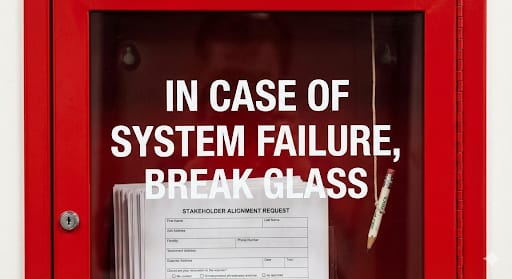
An ethics policy needs to change what an organization is allowed to do. Publishing principles, training staff, and tracking harm can help, but none of those measures alone gives someone the power to stop a harmful deployment.
Ethics-washing critics made this diagnosis first (Ben Wagner, 2018; Brent Mittelstadt, 2019). My test is practical: which profitable action did a principle stop?
A safety rule with a bypass
In December 2023, inspectors at an Australian manufacturing facility found that safety interlocks on a CNC machine had been overridden with a homemade metal key. A worker had become trapped in the machine and suffered broken ribs. The safety system existed, but the bypass let the machine run without it.
A similar question applies to a deployment gate. If an executive can waive it by private message when a launch is late or a major client objects, who can hold the gate closed? A documented rule needs a documented limit on exceptions and someone with the authority to enforce it.
What a dashboard cannot decide
A dashboard can show harm. It cannot decide whether to stop the activity causing it.
An organization may use the same incident report to correct a product or to decide how much damage it can tolerate. Counting incidents is useful only alongside a decision process: who reviews them, what requires a pause, and who can order a correction?
Look for decisions that cost the organization something:
- A launch canceled despite its revenue projection.
- A report that leads to a corrected record, with a route for challenging the result.
- A remediation gate that remains closed until the required work is done.
Those are things a reviewer can inspect. A mission statement cannot substitute for them.
Who keeps the system working
A nurse staying late to secure a bed can conceal a staffing or routing failure. The patient gets care, but the extra effort may never appear in the institution’s account of how it delivered that care.
That work needs to reach someone who can change its cause. Logging a workaround should prompt review of the process, with protection for the person reporting it. Otherwise a system can look successful while exhausting the people who keep repairing it.
Madeleine Clare Elish’s “moral crumple zone” (2019) describes the related problem of people absorbing blame for automated systems they have little control over.
The right to stop
A refusal process also needs protection against retaliation. Staff cannot exercise meaningful stopping power if using it puts their job at risk.
A deployment policy should name who can stop the system, the conditions for restarting it, and how a disputed decision is reviewed. Leadership must accept that those rules can delay a launch or prevent revenue. That is the cost the ethics policy needs to be able to impose.
Local revision
7 October 2026: this local edition was abridged and rewritten to remove repeated metaphors and named concepts. It also replaces claims that dashboards necessarily stabilize harm with the narrower question of how incident reports affect decisions. The original edition remains the version of record.