Woodturning
I came to the lathe from the potter’s wheel
Trimming was always my favorite part of throwing, and turning is mostly trimming.
Pottery, 2022 to 2025
I threw on the wheel for more than two years before my first lathe class. These are in date order.
-
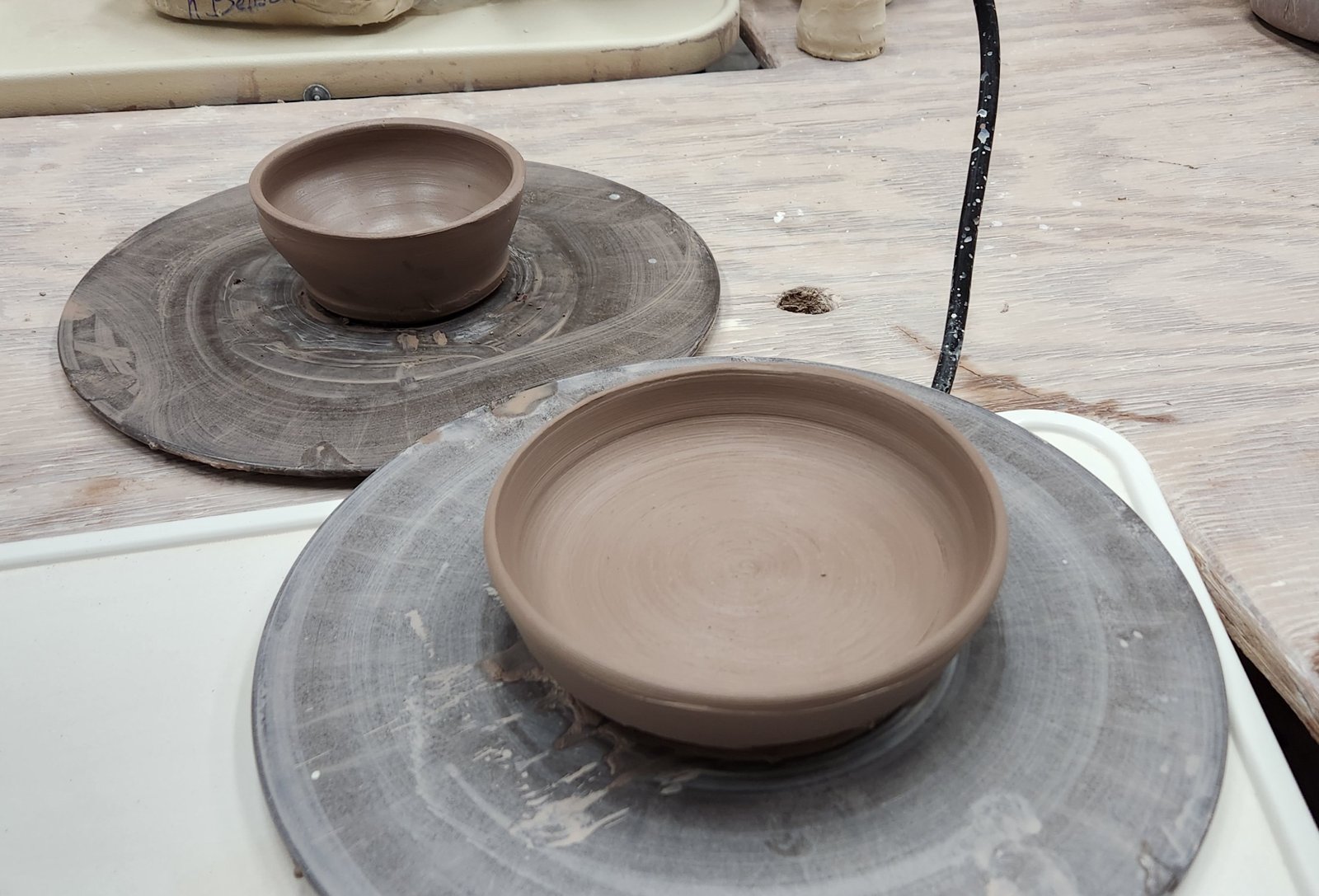
October 2022. Two early bowls, just thrown, still on their bats. -
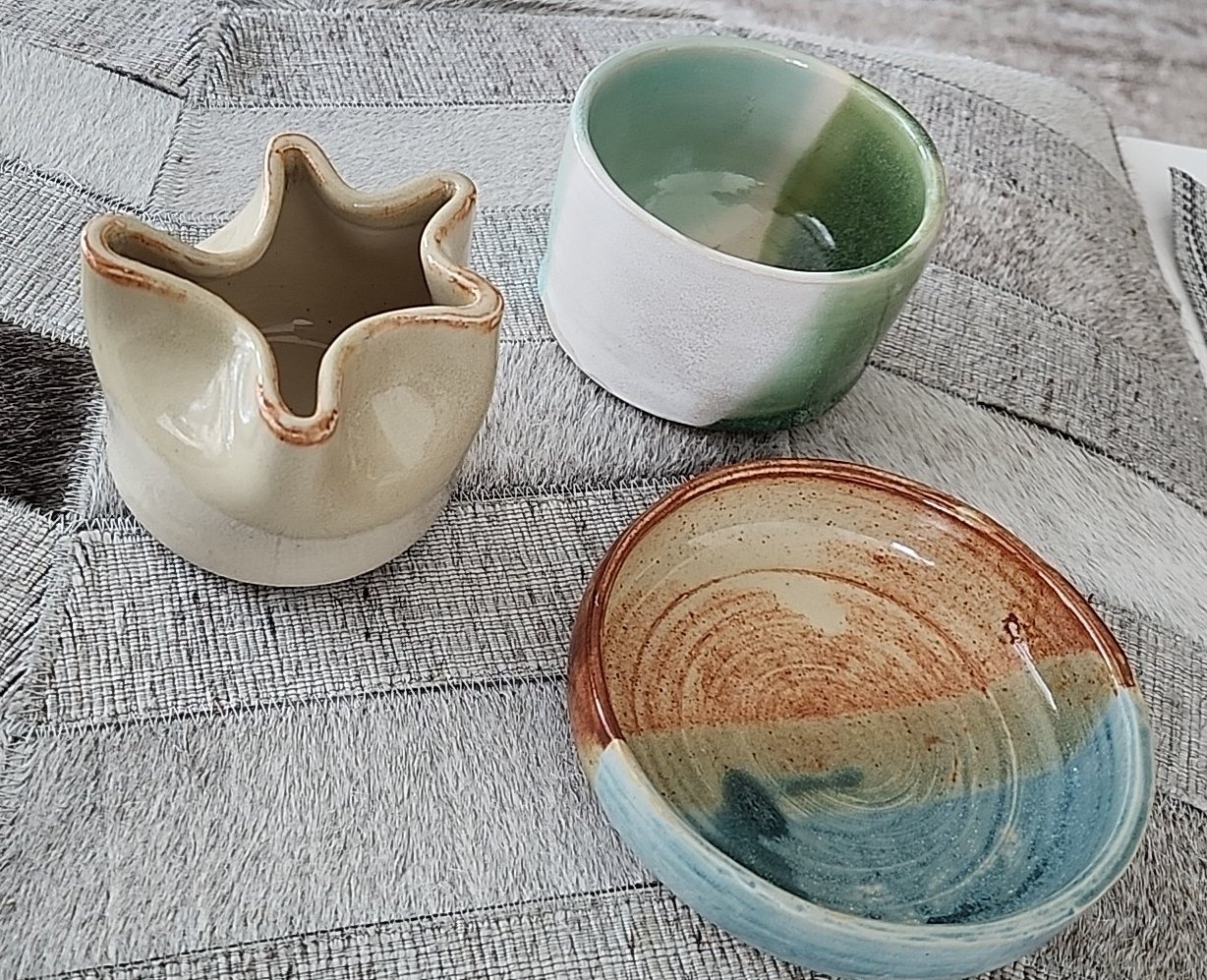
2023. A pinched-rim cup, a two-glaze cup and a shallow dish. -
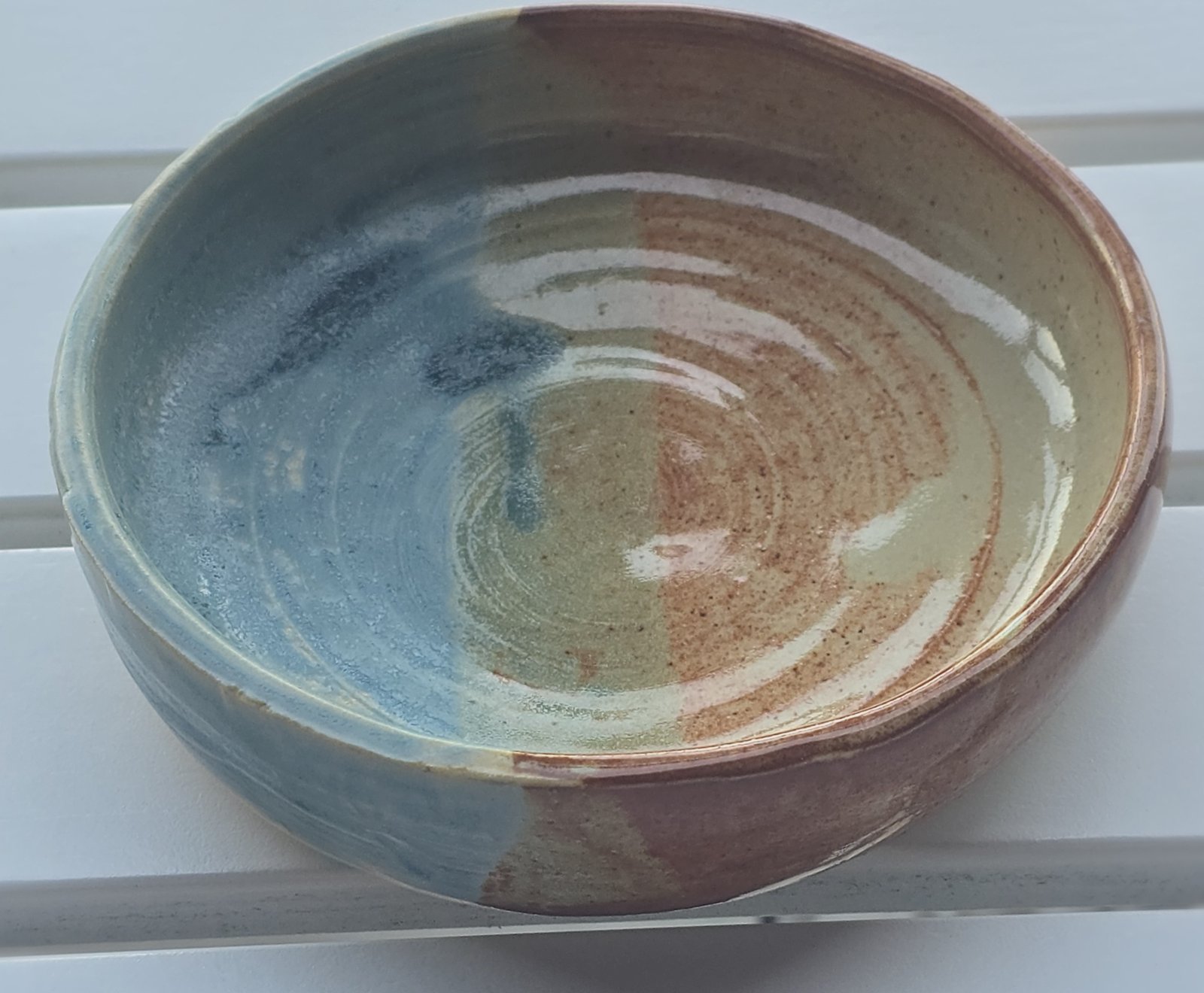
September 2024. A bowl glazed in two overlapping colors. -
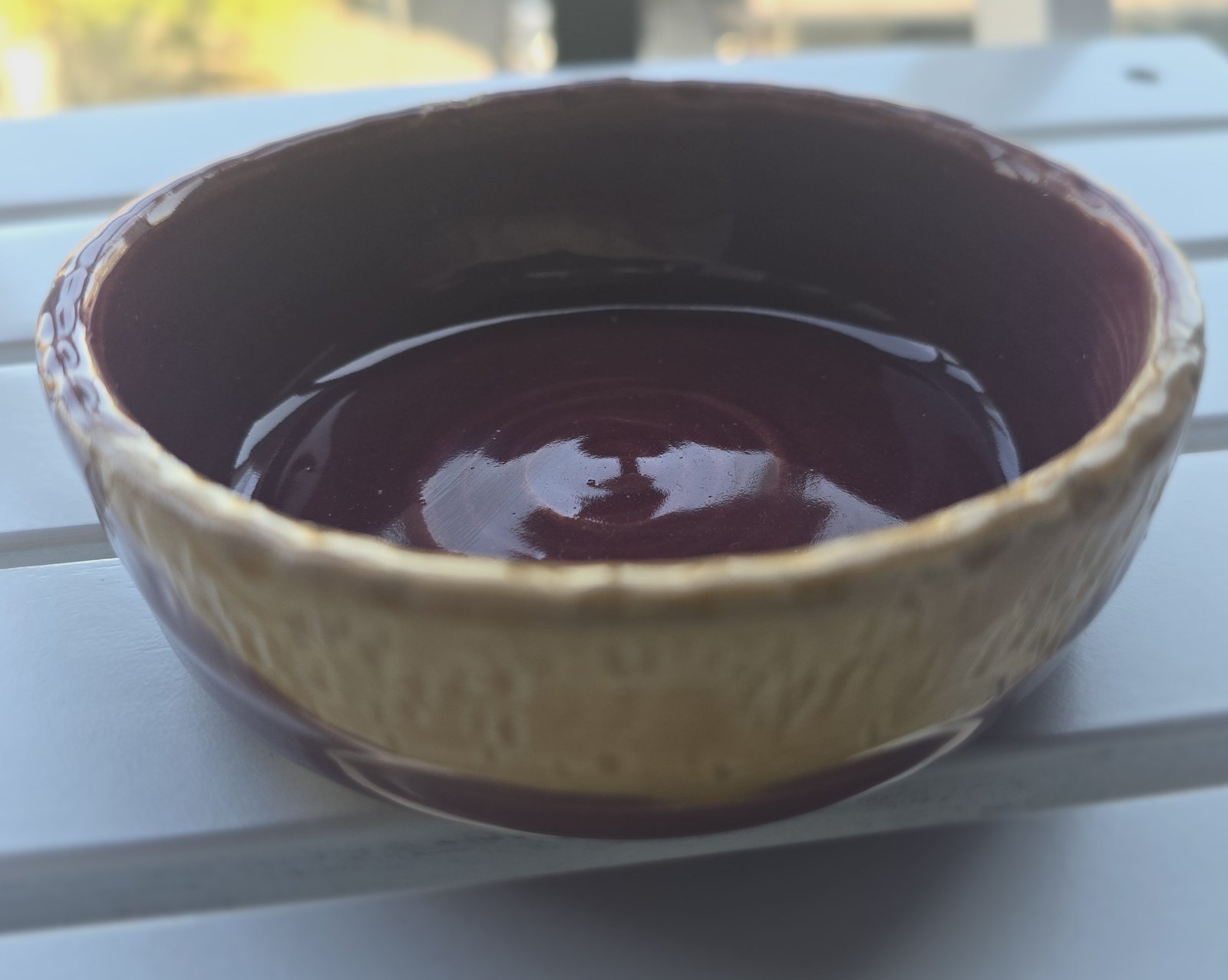
September 2024. A bowl with a textured band around the outside. -
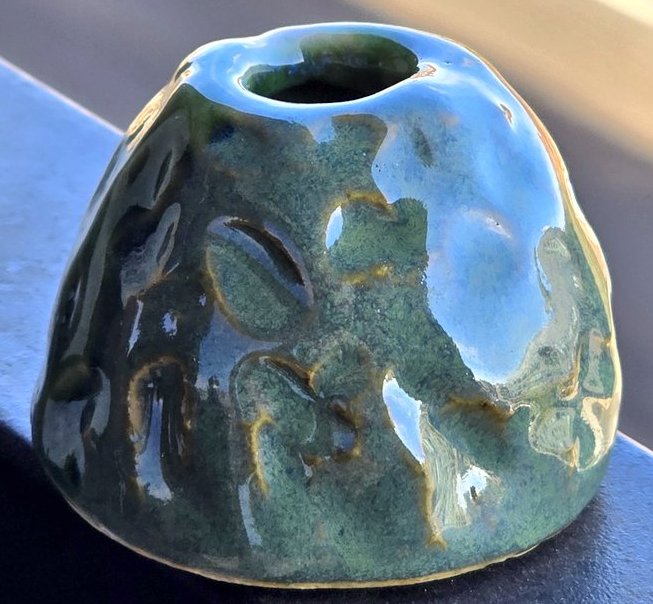
November 2024. A small vase pressed with dimples before glazing. -
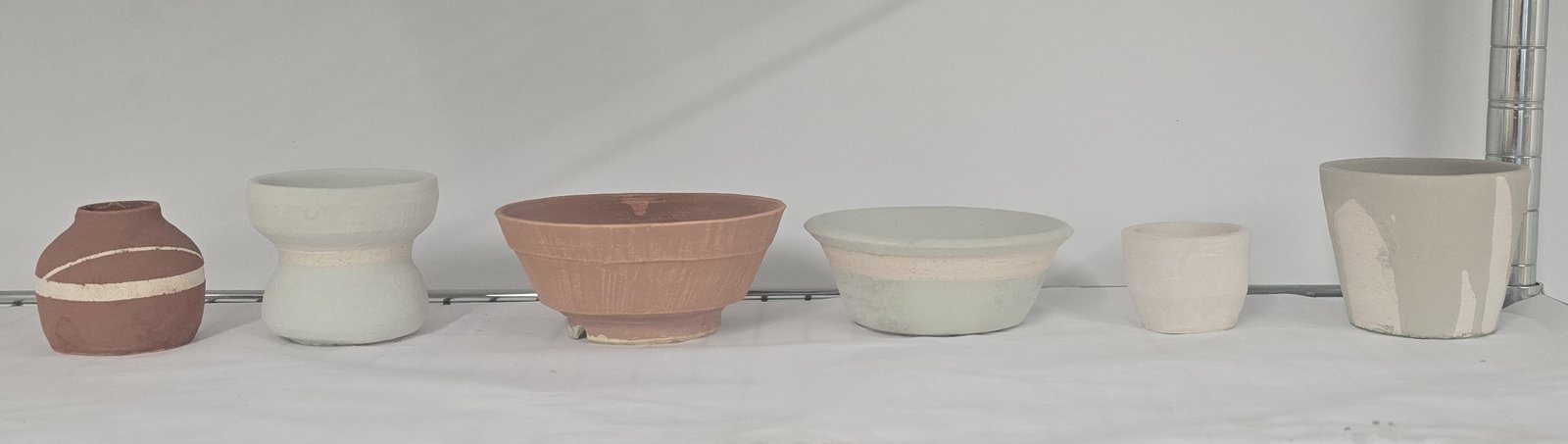
July 2025. A set after its first firing, before glaze. -
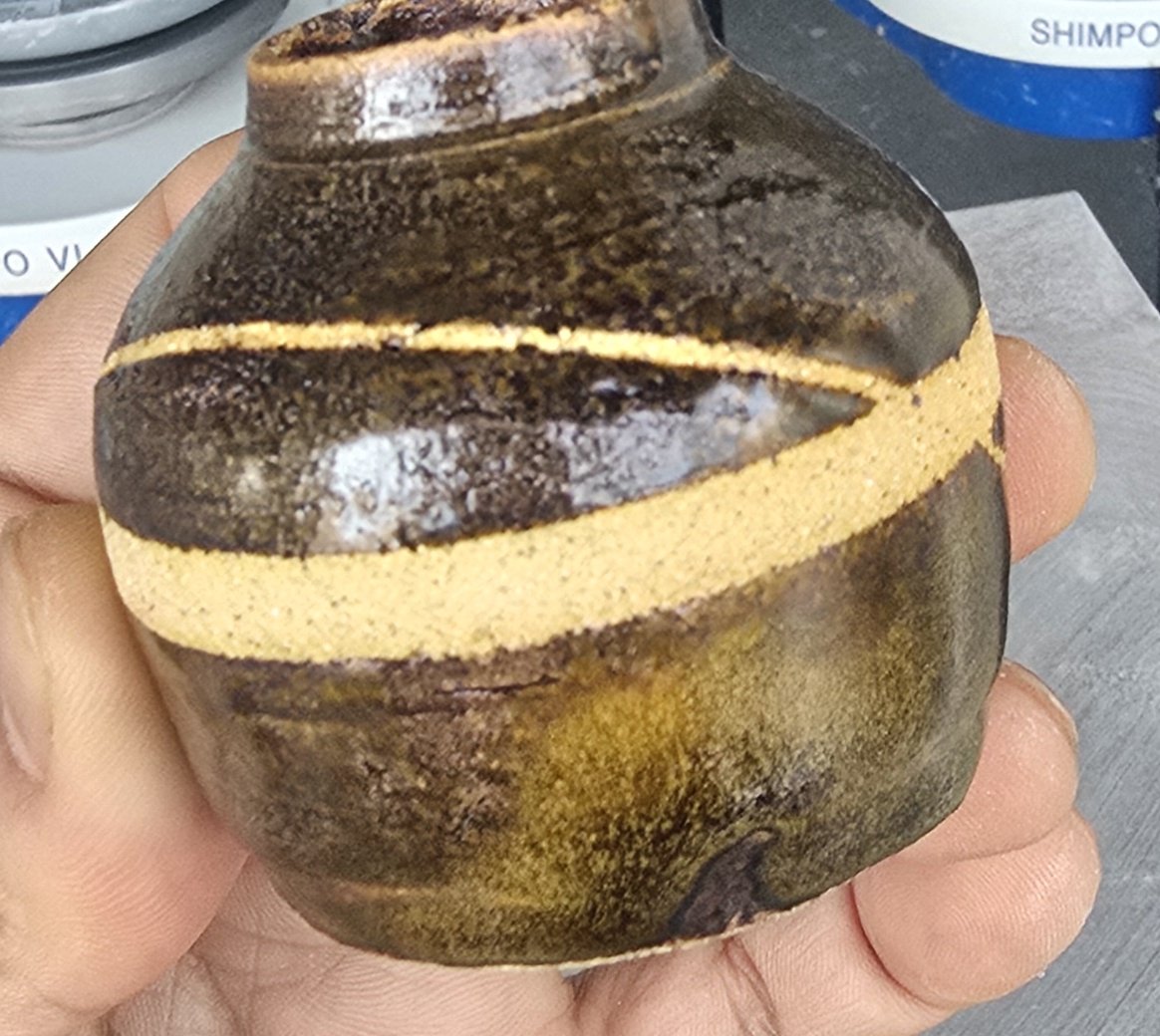
August 2025. A small vase with a band left as bare clay. -
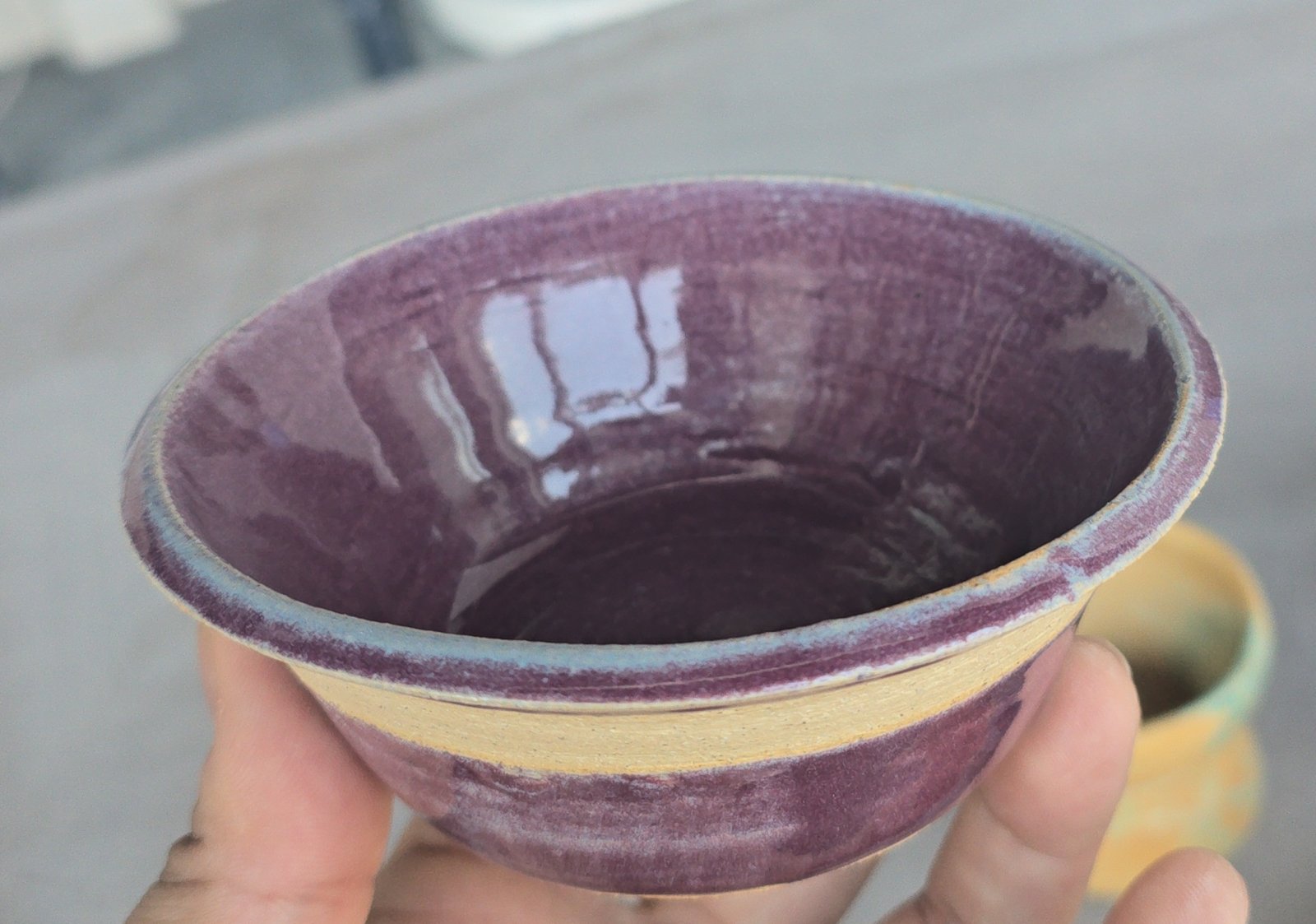
August 2025. A bowl with a bare band below the rim. -
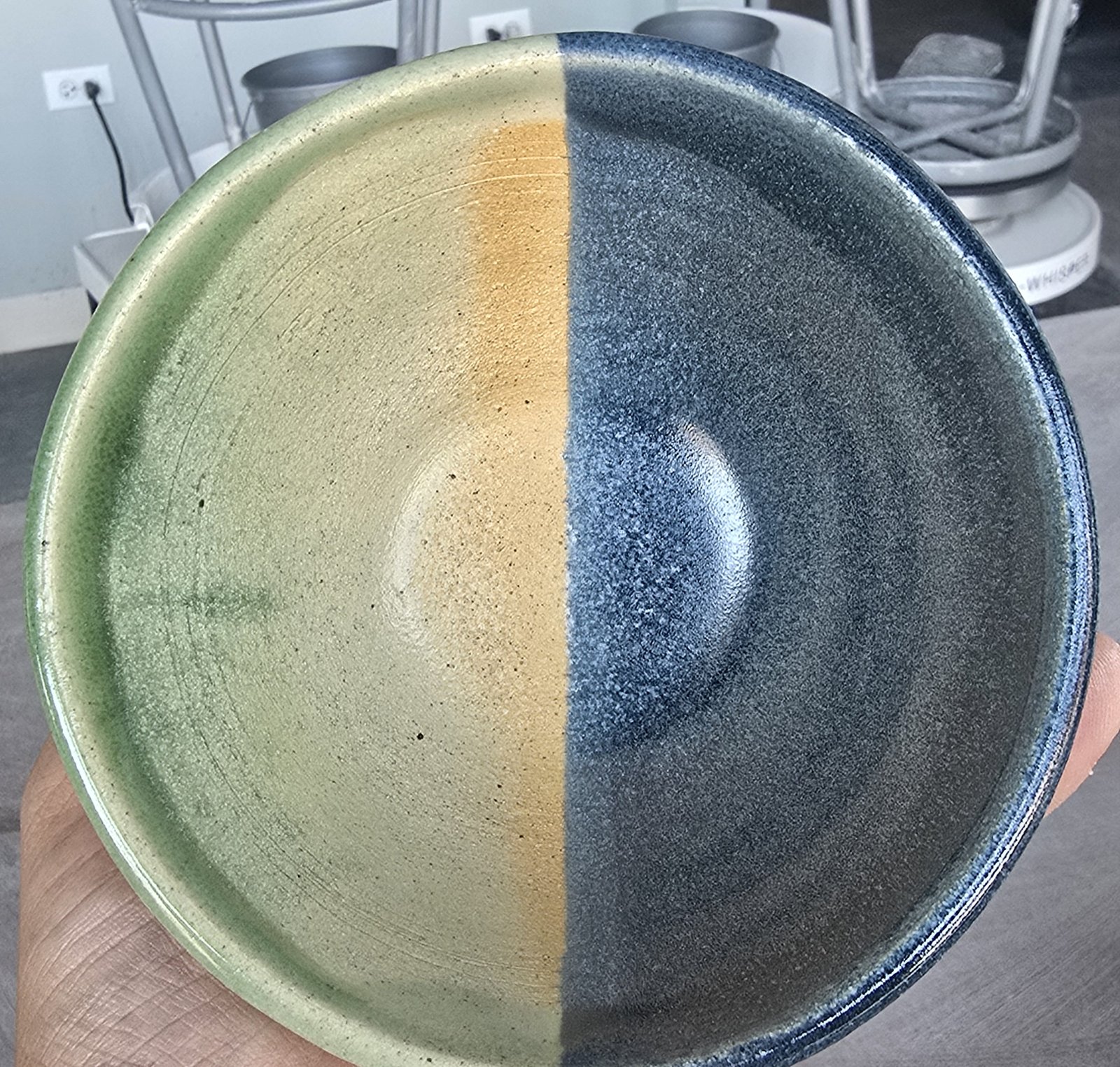
August 2025. A bowl glazed in two halves.
Where I learned to turn
Since 2025 I have had more than 100 hours of instruction at the Chicago School of Woodworking from Andy Kuby, Al Miotke and Graham McLachlan. I am a member of Chicago Woodturners and use the club’s Thursday open shop. In 2026 I went to the AAW’s 40th-anniversary symposium in Raleigh and to Turn-On! Chicago.
Turned pieces
-
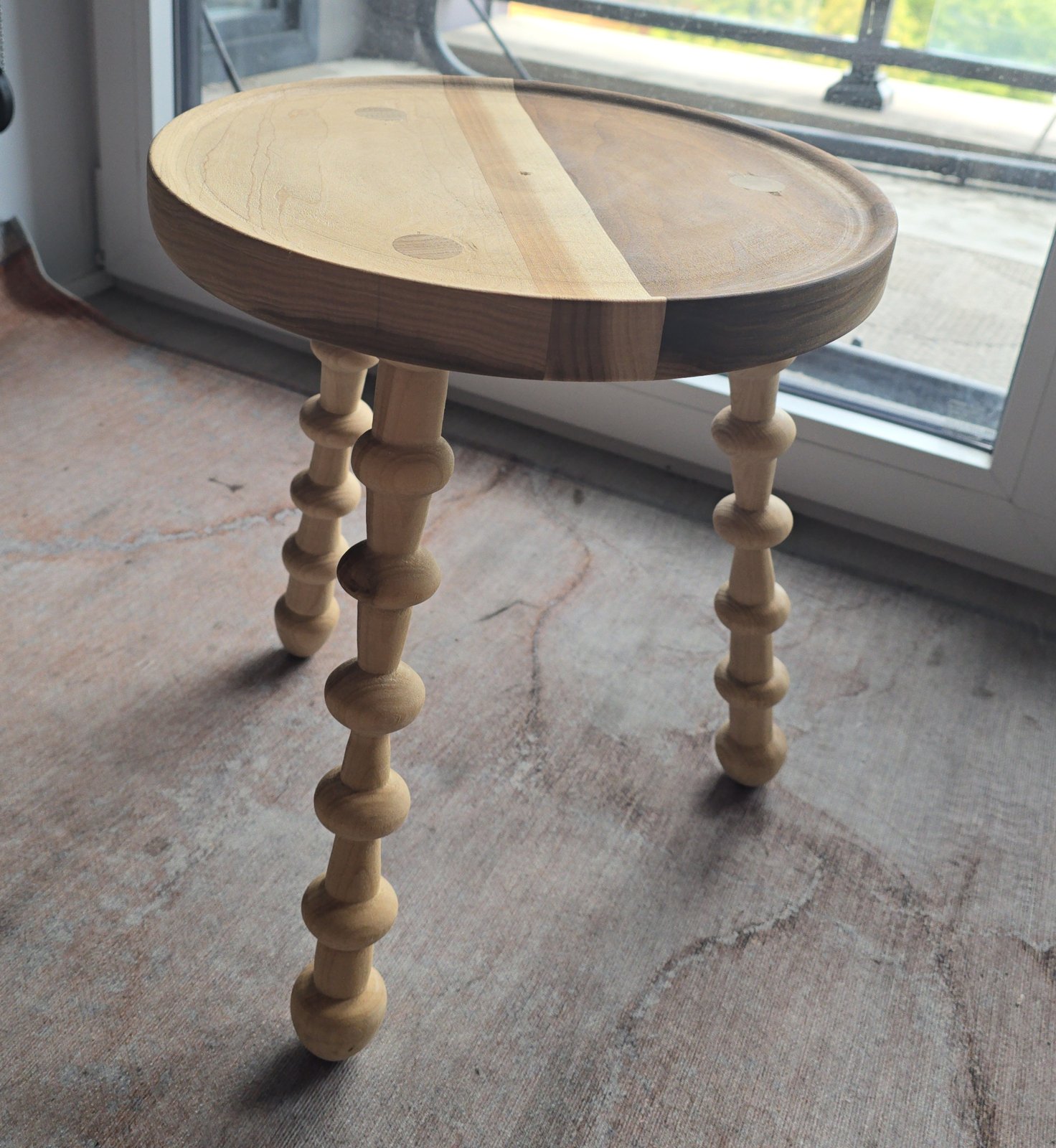
Stool: a walnut and light-wood seat, dished with a raised rim, on beaded legs tenoned through it. -
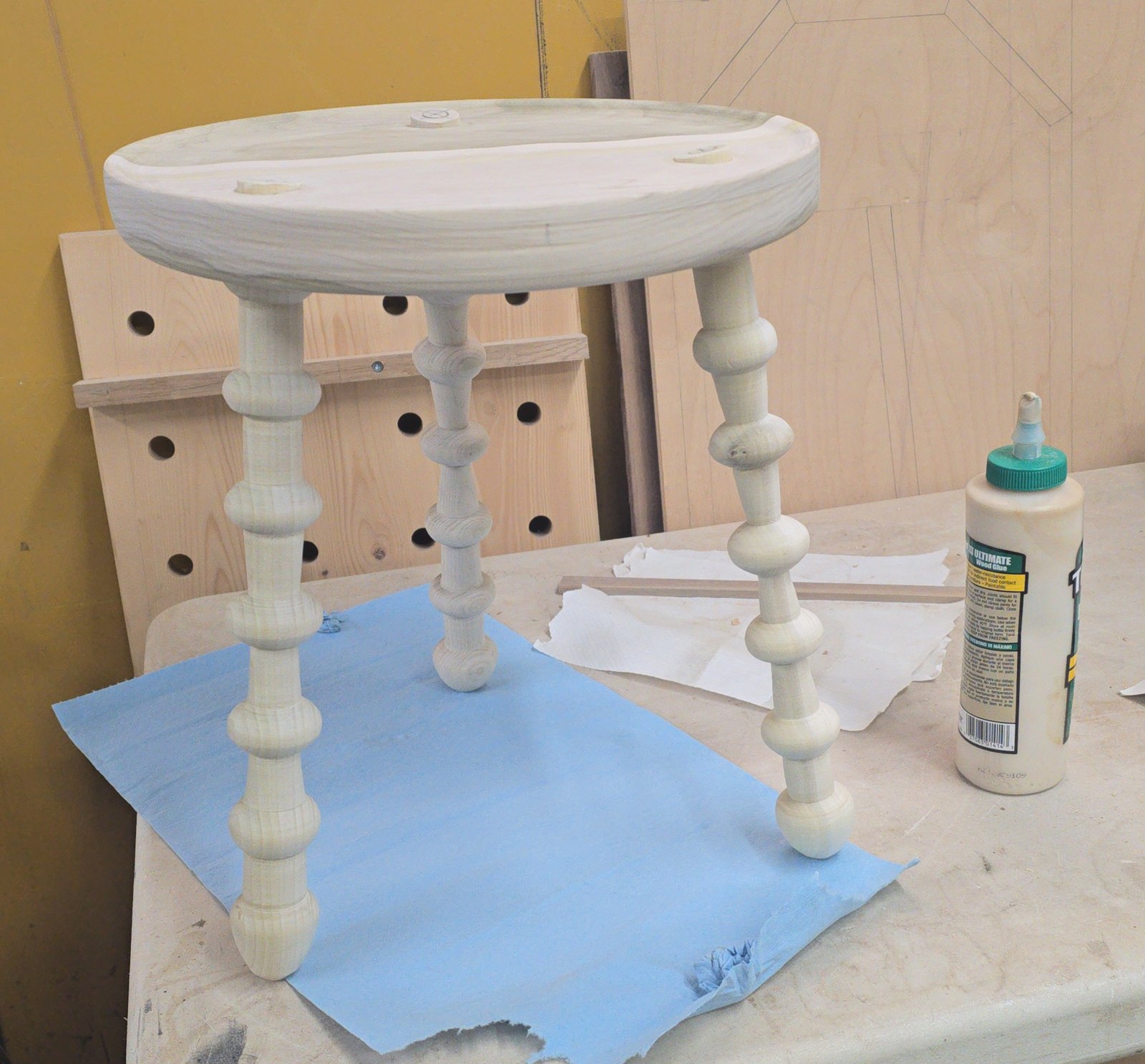
A second stool at glue-up, with the leg tenons wedged through the seat. -
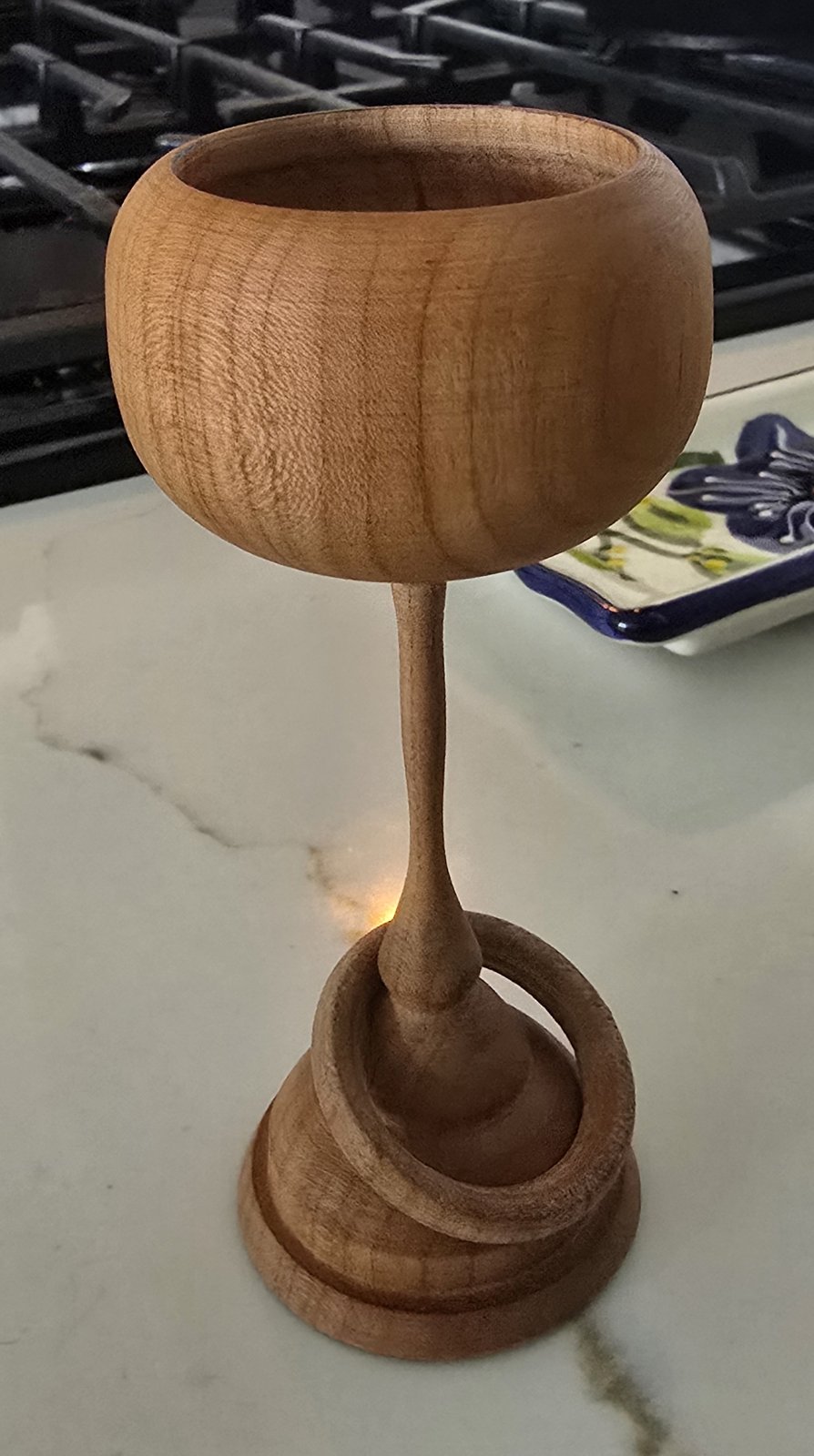
Goblet with two captive rings, turned free from the stem. -
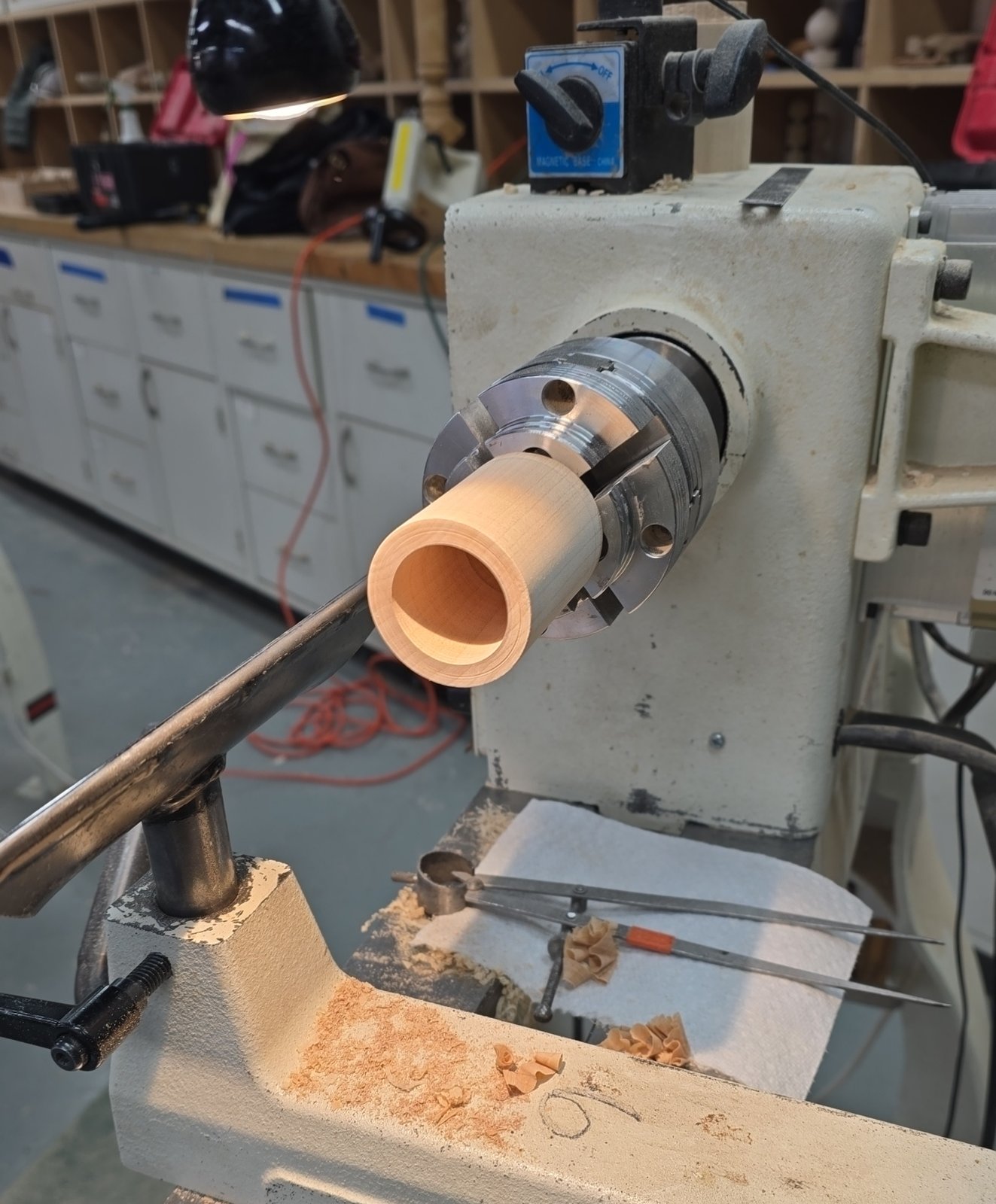
A beech box in the chuck, hollowed, with the step for its lid cut. -
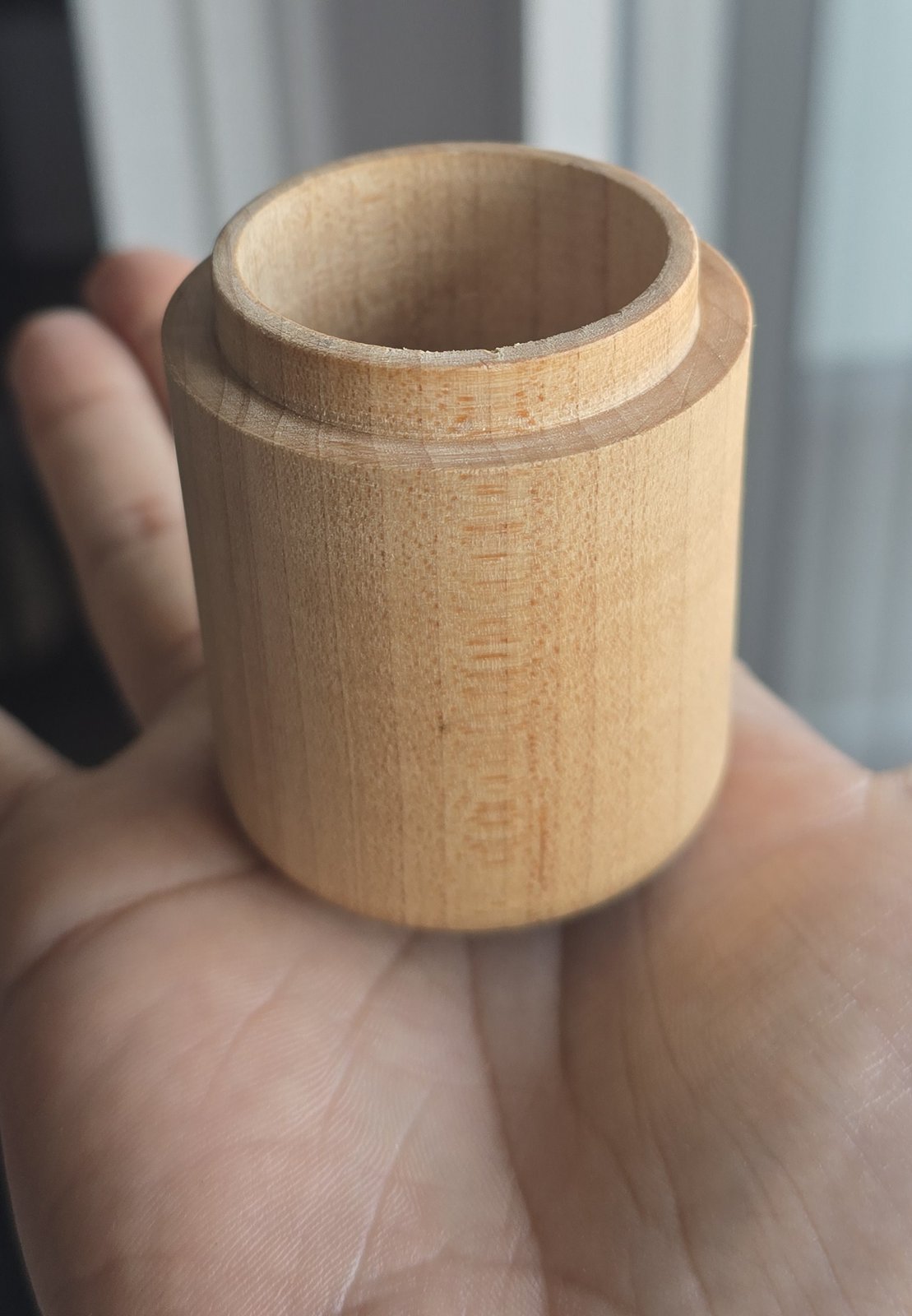
The same box off the lathe. -
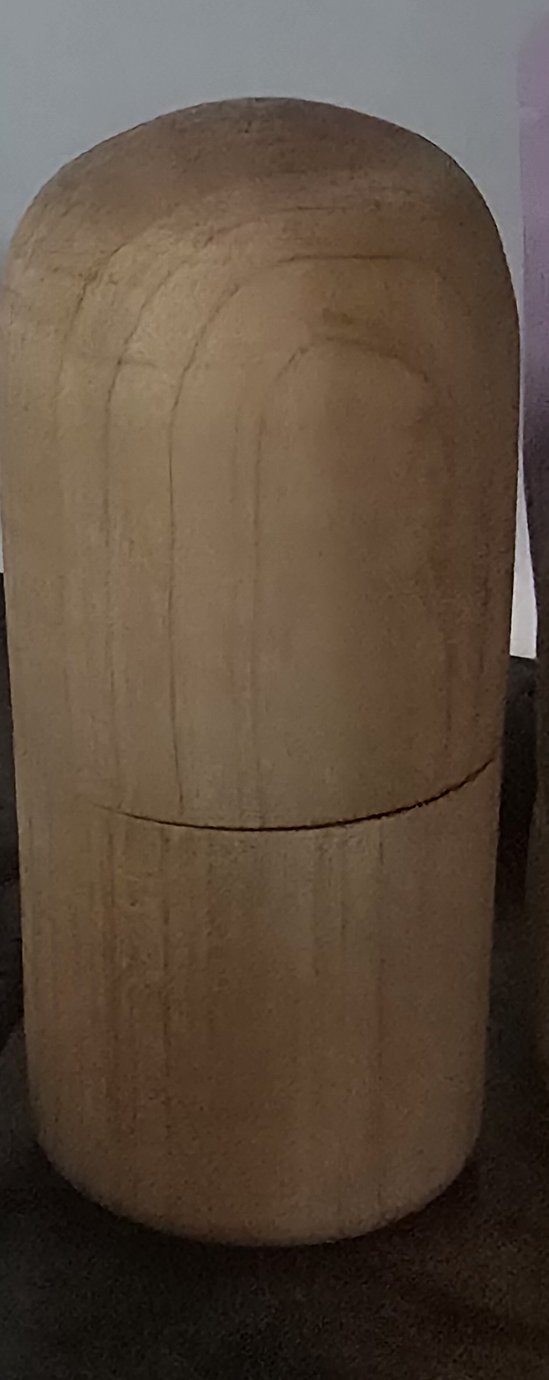
Capsule box with a domed lid. -
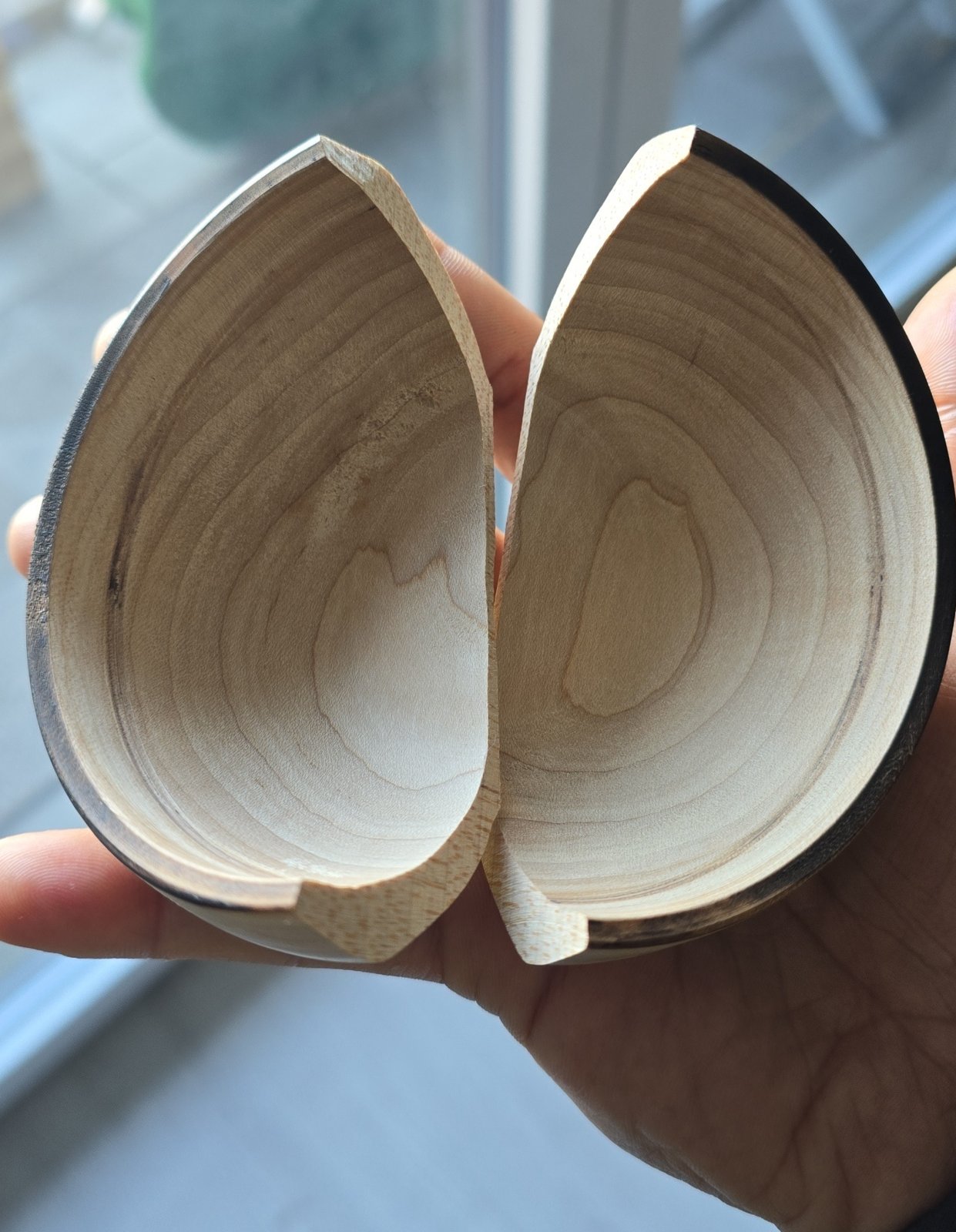
A bowl I cut in half to see whether the inside followed the outside. -
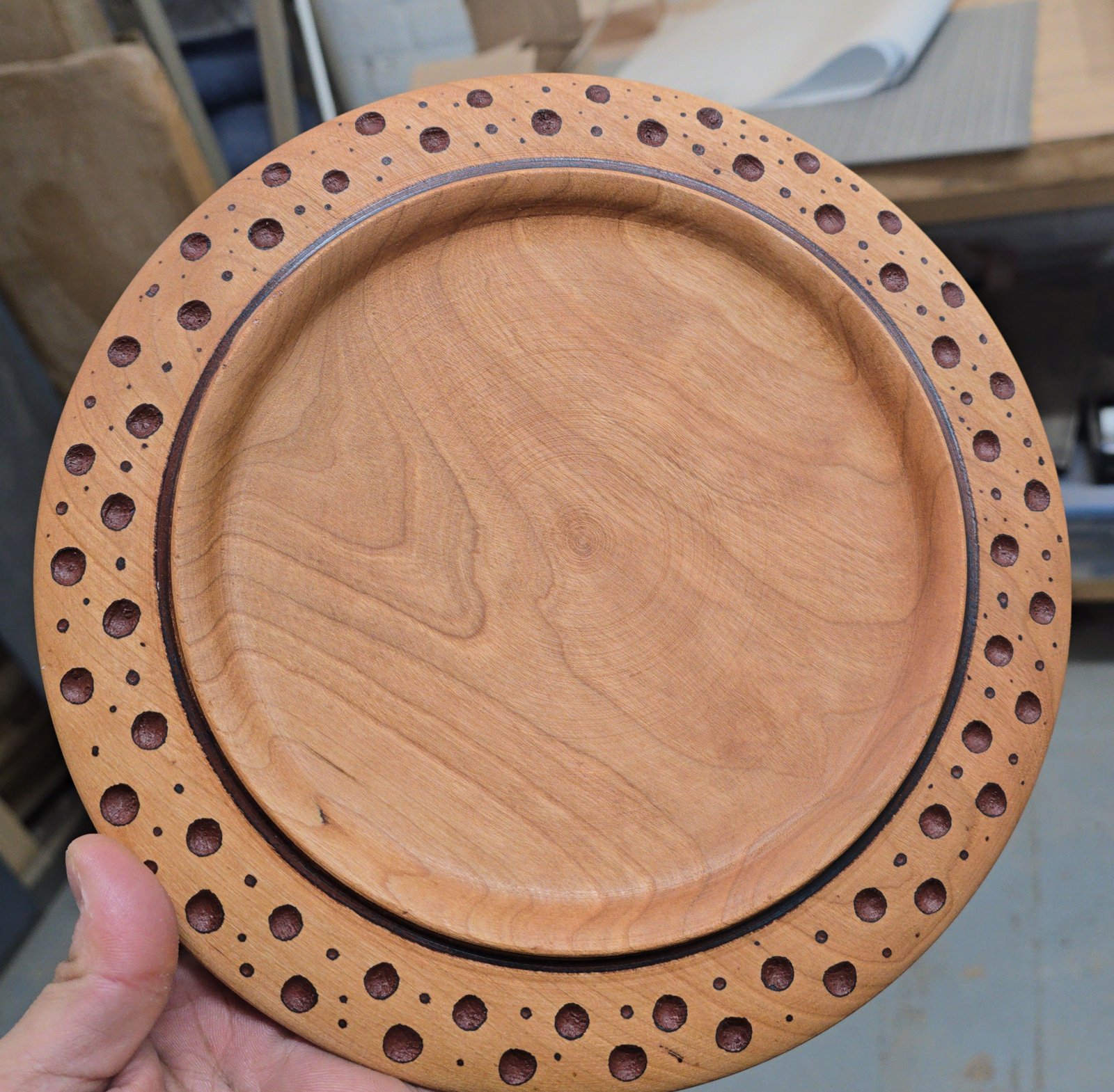
Cherry plate with a textured rim and a burned line around the well. -
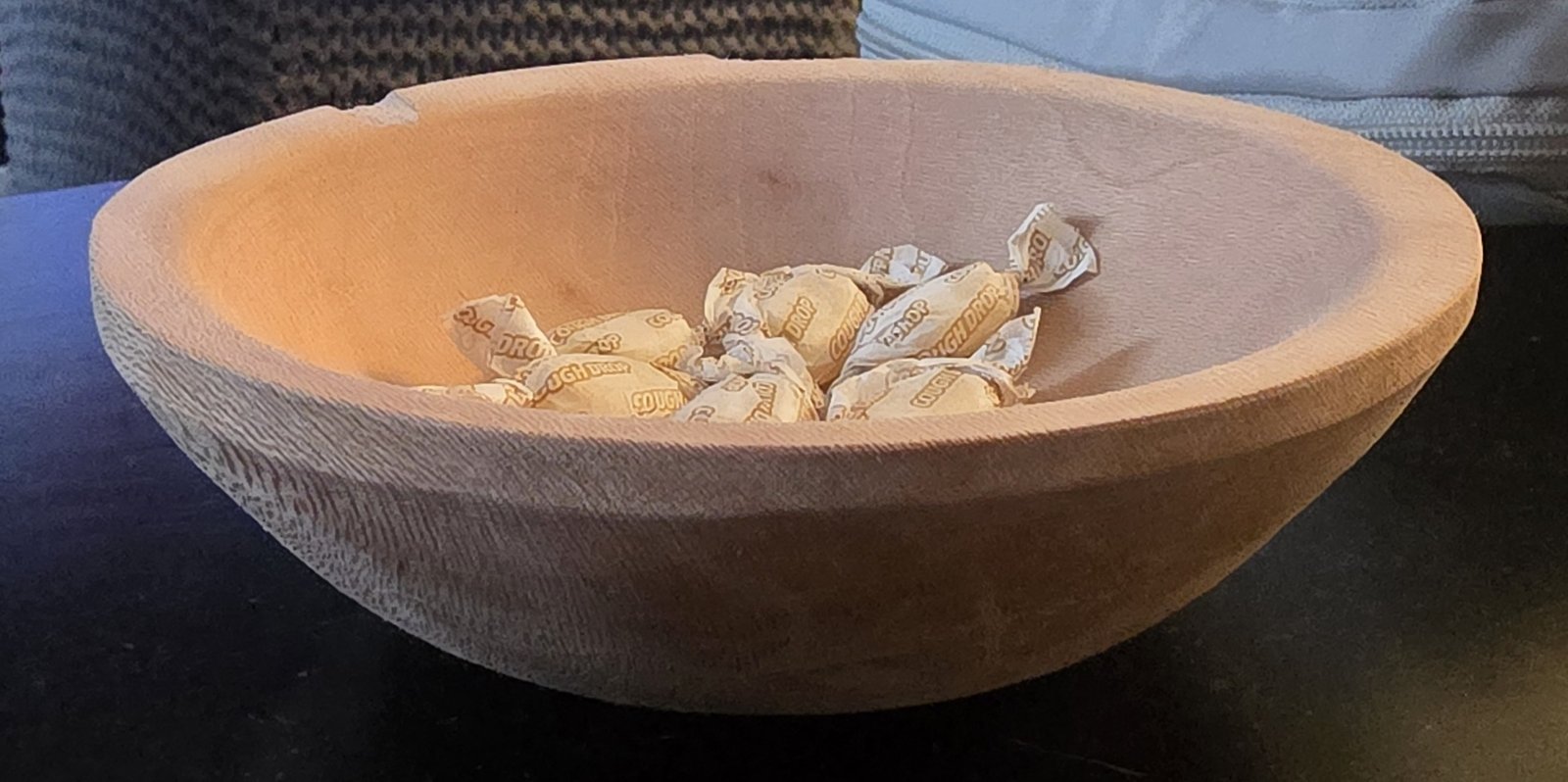
An earlier bowl, unfinished, with tearout on the outside and a chip in the rim.
The labs
I built three labs for questions I kept asking at the lathe. The halved bowl comes from the same habit: check the work instead of trusting how the cut felt.
They share one set of parts. The gouge you turn over in Gouge Lab is the one on the rest in Turner’s Eye, and the bowl it cuts there is Lathe Studio’s.
- Gouge Lab
Which gouge is this, and what is it for?
Bowl, spindle, detail and roughing gouges on one board, turned through the same views so the differences in mass, flute and grind are visible.
- Turner’s Eye
Why does it catch, and what did I do just before it did?
One cut scene where handle height, flute opening, rest gap and fiber support move together, with a readout of which one drifted first.
- Lathe Studio
Will that curve look right once it is round?
A bowl, hollow form or goblet profile you can drag, revolved and halved in 3D in four timbers, so a curve and its wall can be judged in the round before a blank is committed to it.
What they are not
They are rehearsal, not instruction. Ten minutes at a lathe beside someone who has already made the mistake you are about to make teaches more than any of them.
Each lab draws in 2D first and adds the 3D view when you scroll to it. Without WebGL the 2D drawing stays, and Lathe Studio’s profile can still be edited.
Revised